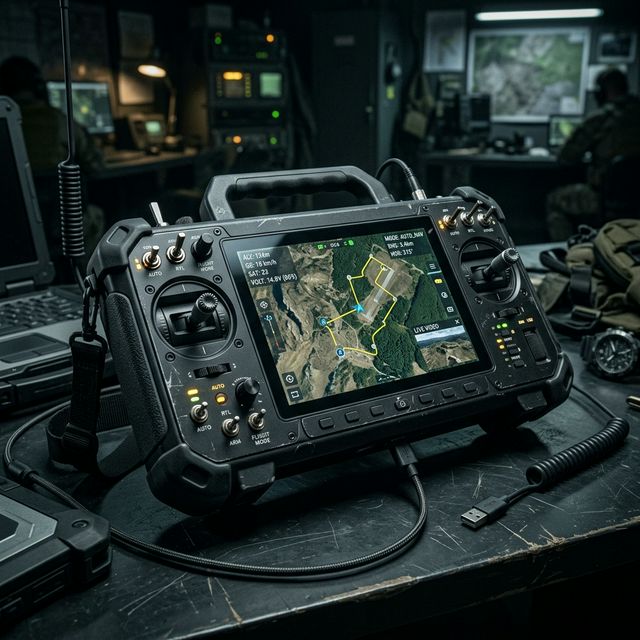
A modular, full-featured Python-based ground station daemon powered by FastAPI. Supports both ArduPilot and PX4 MAVLink implementations natively, configured for seamless operator onboarding.
The core of AutoDrone is powered by a lightweight Python FastAPI server, serving a modern web UI while managing backend connections.
It natively supports both ArduPilot and PX4 MAVLink dialects and can communicate via Wi-Fi (UDP), USB/Serial, or robust 915MHz/433MHz Telemetry Radios depending on the platform's requirements.
The inner workings and subsystems of the autopilot daemon.
Features a custom-built 3D A* (A-Star) pathfinding engine tailored for local frame waypoints. Generates optimal trajectories accounting for complex environments and translates raw start/end positions into navigable nodes.
Features advanced video processing with MJPEG, WebRTC, and production-grade GStreamer RTSP pipelines. Concurrently redistributes critical drone telemetry metrics to the UI through a native FastAPI WebSocket ticking reliably at 2Hz.
A zero-compromise safety supervisor featuring configurable Return-To-Home (RTH) behaviors, allowing direct straight-line returns or complex path backtracking. Real-time failsafes automatically trigger upon Low Battery or Signal Loss.
Forgo bulky native ground control stations. AutoDrone ships with an intuitive HTML5/JS setup wizard and operational dashboard accessible from any modern browser.
Operators can seamlessly toggle the map engine between Leaflet.js for offline capability or Mapbox GL JS for advanced rendering, accompanied by switchable metric and imperial telemetry units.
Engineered for deterministic reliability. AutoDrone includes native runner scripts pointing to Software In The Loop (SITL) simulators imitating physical drone kinematics.
Allows engineers to test multi-waypoint navigation, inject virtual GPS failures, and sabotage battery parameters to observe the strict execution of Failsafe logic safely in a virtual sandbox before ever spinning up a physical rotor.